Technology & Applications
Silicon-class cost. III-V performance. On a film you can roll, bend, or tape down.
Here’s how it works and where it goes.
The Science
The breakthrough, step by step
The breakthrough, step by step
Our technology is built on III-V semiconductor nanowires, thousands of times thinner than a human hair, engineered atom-by-atom to capture and convert sunlight.
Architecture
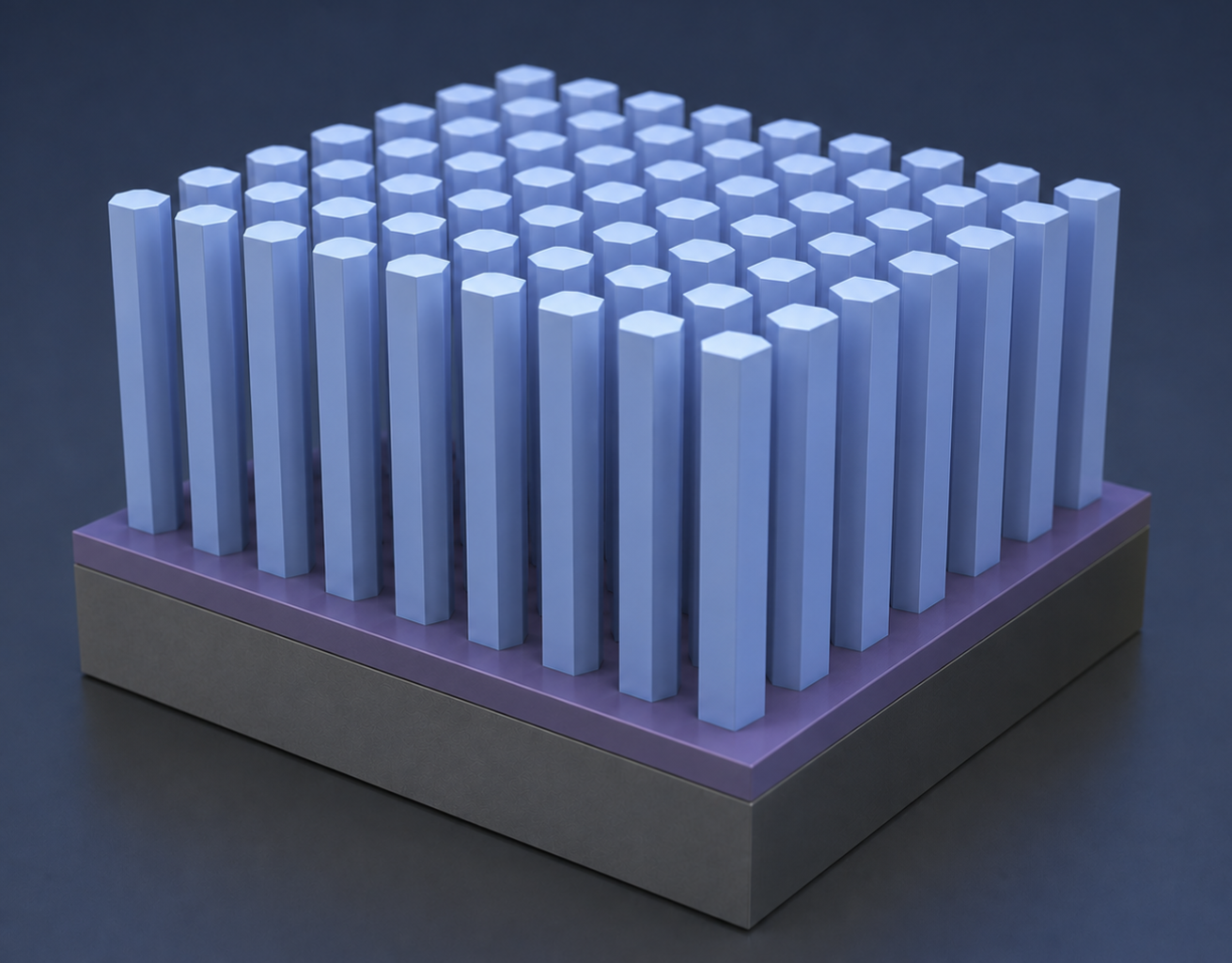
- III-V Nanowire Array | Built-in p-n Junctions
- Reusable Silicon Growth Substrates
- Tunable Light capture
- Transparent Contact Layer
- Flexible Polymer Encapsulation
01
III-V Semiconductor Nanowires
Ultra-thin semiconductor structures, just ~100 nanometers across. At this scale, charge carriers are collected with far greater efficiency, and each nanowire acts as an independent photovoltaic element.
High-quality III-V crystal growth on reusable Si substrates allows Kamo Nano membranes to hold efficiency under the intense radiation for space applications.
02
Epitaxial Growth
Kamo Nano nanowires are grown on a crystalline substrate layer-by-layer with atomic precision. The result is a dense forest of upright nanowires, each acting as an individual photovoltaic element.
The process uses dramatically less raw material than conventional wafer production, lowering both cost and environmental footprint from the very first step.
03
Epitaxial Lift-Off & Transfer
Once grown, the nanowire array is embedded in a flexible polymer matrix and delaminated. The growth substrate is then reused, without the need for conventional substrate recovery procedures.
This single step eliminates the primary cost that has historically made III-V solar prohibitively expensive, bringing economics toward silicon-class while improving sustainability.
04
Why It Outperforms
Nanowire geometry naturally traps light, reducing reflection and maximizing absorption. Small cross-sections mean crystal defects are eliminated, so performance stays high where bulk semiconductors fall apart.
Kamo Nano membranes stay efficient under intense radiation, making them uniquely suited for space applications, while their flexibility opens applications no rigid panel can serve.
Applications
Three markets the rest of the industry can't reach
Our radiation-resistant, flexible nanowire membranes open three categories where conventional silicon and III-V simply don’t fit.
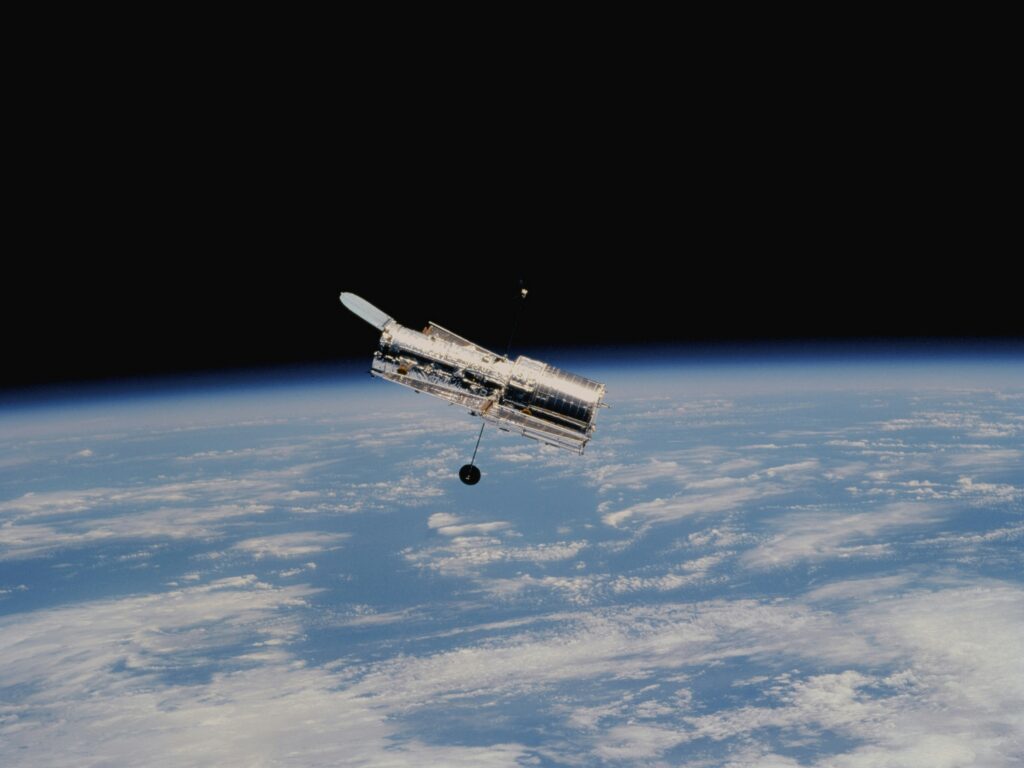
Solar arrays that survive a 40-year orbit
Operators planning large-scale, space-based solar arrays, including kilometer-class infrastructure that beams power back to Earth, need cells that survive deep, sustained radiation. Our membranes deliver 40× the radiation tolerance of current standards, turning a 4-year asset into a 40-year one.
Solar that bends to fit the farm
Flexible, softer membrane formats integrate directly into greenhouses, vertical farms, and solar-farm infrastructure, generating power without sacrificing growing surface or light spectrum. A current strategic investor is actively scaling deployments in this category.
Buildings that earn their skin back
Our semi-transparent nanowire membrane applies directly to windows and façades without obstructing views, turning every south-facing pane into generation surface. The aesthetic stays. The view stays. The bill goes down.
Solar arrays that survive a 40-year orbit
Operators planning large-scale, space-based solar arrays—including kilometer-class infrastructure that beams power back to Earth—need cells that survive deep, sustained radiation. Our membranes deliver 40× the radiation tolerance of current standards, turning a 4-year asset into a 40-year one.
40 years

Solar that bends to fit the farm
Flexible, softer membrane formats integrate directly into greenhouses, vertical farms, and solar-farm infrastructure—generating power without sacrificing growing surface or light spectrum. A current strategic investor is actively scaling deployments in this category.
Buildings that earn their skin back
Our semi-transparent nanowire membrane applies directly to windows and façades without obstructing views—turning every south-facing pane into generation surface. The aesthetic stays. The view stays. The bill goes down.

Get in touch
Ready to power the future?
Whether you’re a potential partner, government agency, or investor, we’d welcome the conversation.